
Amelia Swann didn’t set out to become a name whispered in London’s private circles. She was a dancer with a degree in theater, a quiet woman who liked rainy afternoons and strong coffee. But after a series of unexpected life shifts-her mother’s illness, the collapse of her freelance gig, the rent increase that wiped out her savings-she found herself asking a simple question: what can I offer that people will pay for, honestly and safely? That’s how she started working as an escort. Not as a fantasy, not as a gimmick, but as a job. A real one. With boundaries, contracts, and respect.
There are escort service in dubai that operate like high-end clubs, with velvet ropes and private lounges. Amelia’s model is different. She doesn’t work for agencies. She doesn’t take calls after 11 p.m. She screens every client with a 15-minute video call first. No photos, no names, just voice and vibe. If someone feels off, she cancels. Simple as that.
Why London Escorts Are Different From What You See Online
Most people think of escorts as either glamorous socialites or desperate figures trapped in a system. The truth is messier, quieter, and more human. London has thousands of independent escorts. Many are university graduates, artists, nurses, or former teachers. They don’t advertise on sleazy websites. They use encrypted apps, private forums, and word-of-mouth referrals. Their clients? Mostly men in their 30s to 50s-engineers, lawyers, small business owners-who are lonely, not predatory. They don’t want sex. They want to be heard.
Amelia once had a client who cried during their third meeting. He’d lost his wife to cancer six months earlier. He didn’t ask for anything physical. Just someone to sit with him while he ate dinner and talked about her. She didn’t charge him that night. He sent her a thank-you note the next week. She still keeps it.
The Reality Behind the Myths
There’s a lot of noise about sex dubai and the idea that escort work is all about raw physicality. But in places like London, where regulation is murky and stigma is high, the emotional labor often outweighs the physical. Clients pay for presence. For someone who remembers their favorite tea. For a hug that doesn’t come with strings. For silence that doesn’t feel empty.
Amelia’s rates are transparent: £150 for an hour, £250 for two. No hidden fees. No pressure to extend. She books no more than three clients a week. She takes Mondays off. She sees a therapist every other week. She’s not trying to escape her life-she’s building a better version of it.

How This Compares to Other Cities
In cities like Berlin or Amsterdam, escort work is partially decriminalized. In New York, it’s a felony. In London, it’s a gray zone. You can’t sell sex, but you can sell companionship. That’s the loophole. And it’s why so many women like Amelia operate independently. They avoid brothels, avoid pimps, avoid the violence that comes with unregulated systems.
Compare that to escorts near me searches in smaller towns. Those often lead to predatory operations. Women are trafficked. Men are scammed. The whole system is designed to exploit. Amelia’s model is the opposite. It’s built on consent, clarity, and control.
What Clients Really Want
Amelia keeps a private journal. Not about clients. About herself. One entry reads: "Today, a man asked if I thought he was ugly. I told him no. He said he hadn’t heard that in seven years. I didn’t know what to say. So I just held his hand. That’s all he needed."
Most clients don’t want a fantasy. They want to feel seen. To be reminded they’re still human. That’s why the most common request isn’t for sex-it’s for conversation. For a shared meal. For someone to laugh at their bad jokes without judgment.
The Cost of Doing This Work
It’s not all quiet dinners and gentle silences. There are nights she comes home shaking. Times she’s had to block someone who crossed a line. Once, a client showed up drunk and tried to force her to do something she said no to. She called the police. They didn’t arrest him-he claimed they were "just friends." But she had the recording. He was charged with assault.
There’s no safety net. No health insurance. No paid sick days. She pays her own taxes. She buys her own locks. She sleeps with a panic button under her pillow. She doesn’t tell her family. Her brother thinks she’s a travel blogger.
Is This Sustainable?
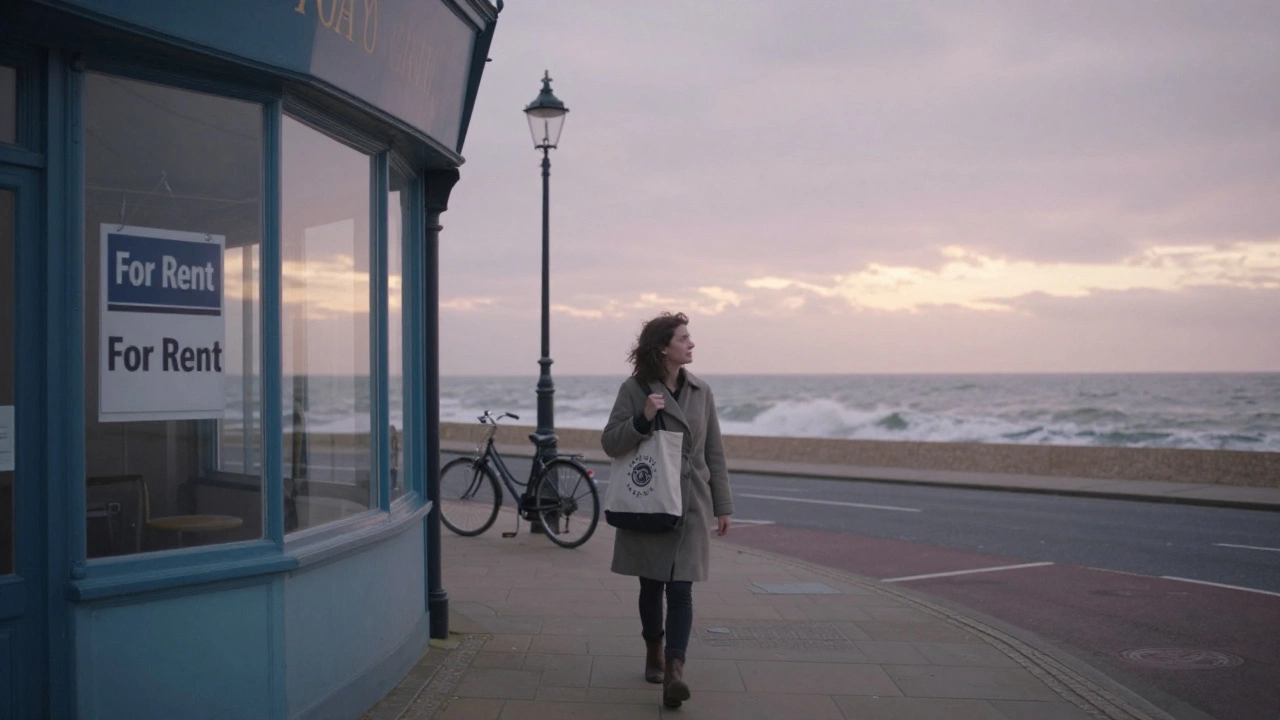
Amelia plans to stop in two years. She’s saving every pound. She wants to open a small café in Brighton. A quiet place with books, tea, and no expectations. She’s already found a space. The landlord is a retired teacher who doesn’t ask questions.
"I’m not proud of what I do," she told a friend last week. "But I’m proud of how I do it. I’m not broken. I’m not a victim. I’m just a woman trying to survive on her own terms."
There’s no glamor here. No luxury cars. No designer dresses. Just a woman who chose dignity over shame-and built something real out of the cracks.